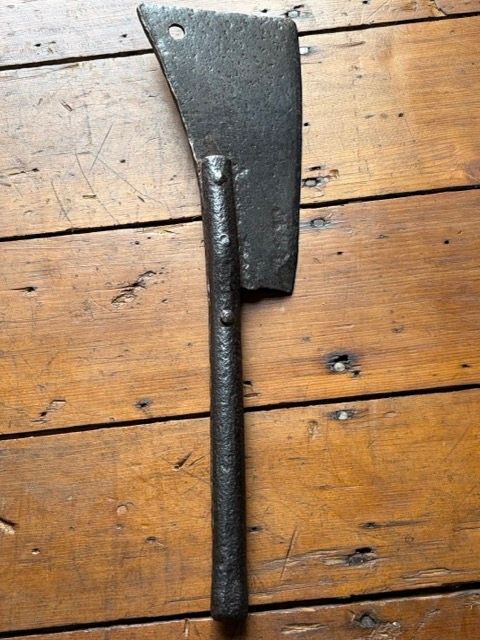
Antique Early 19th-Century 5 lb. Forged Steel Cow Splitter – Heavy Commercial Beef Cleaver
$195.00
In stock: 1 available
Product Details
This massive antique cow splitter is a rare survival of early 19th-century American butchery trade tools. Weighing in at a formidable 5 lbs, this heavy-duty beef splitter was purpose-built for the immense force required to halve beef carcasses down the spine.
-
Blade & Construction: Hand-forged or early drop-forged high-carbon steel with a thick, heavy spine and an exaggerated profile designed to deliver maximum downward momentum. Features a deep, authentic age patina, honest forge marks, dark oxidation, and light surface pitting characteristic of 200-year-old ironwork.
-
Handle & Tang: Heavy-duty full-tang construction with original (or historic replacement) hardwood handle scales secured by large flush rivets, showing smooth wear from generations of commercial shop use.
-
Condition: Antique condition. The steel displays a rich historical character with no major structural cracks. Edge shows expected signs of historical hand-sharpening and working wear.
History
In the early 1800s, before automated overhead rail saws and powered processing, butchers relied entirely on hand-swung splitters to dress large livestock. The "cow splitter" (or carcass splitter) was the largest and heaviest class of cleaver in a butcher's shop, wielded with two hands or a heavy one-handed grip to split cattle and hog carcasses into sides.
Forged during the early American industrial era by specialized edged-tool makers, tools of this weight and scale required exceptional blacksmithing skill to achieve the proper temper—hard enough to sever bone and cartilage without chipping under high-impact blows. Early 19th-century examples of this 5 lb size are highly sought after by collectors of primitive trade tools, blacksmithing artifacts, and antique culinary items.
Dimensions
-
Overall Length: ~22.0 – 28.0 inches
-
Blade Length: ~10.0 – 14.0 inches
-
Blade Height (at widest point): ~5.5 – 7.0 inches
-
Spine Thickness: ~0.375 inches (3/8")
-
Total Weight: ~5.0 lbs (80 oz)
Antique Early 19th-Century 5 lb. Forged Steel Cow Splitter – Heavy Commercial Beef Cleaver