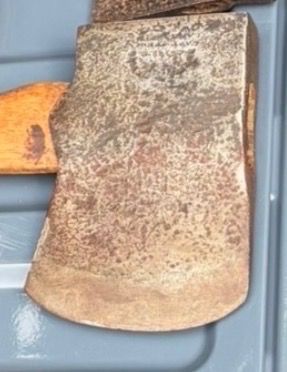
Antique G. SENER Lancaster, PA Single-Bit Felling Axe – Eagle Stamp, Old PA Pattern on 32" Old Hickory Handle
$244.00
In stock: 1 available
Product Details
This fine 19th-century antique Pennsylvania single-bit felling axe is a rare piece of regional American edge-tool history. Forged by G. Sener in Lancaster, PA, this axe features a clear maker’s stamp alongside an iconic eagle touchmark. It comes fitted to an authentic 32-inch straight "Old Hickory" hardwood handle with a period-correct, tight wood-friction fit (no wedge required).
-
Head & Stamping: Forged high-carbon steel single-bit head stamped clearly with "G. SENER / LANCASTER, PA" and featuring an ornate stamped Eagle mark on the cheek. Displays a deep charcoal-gray antique patina, fine forging character, and minor surface oxidation appropriate for its age.
-
Pattern & Geometry: Traditional early Pennsylvania / Philadelphia regional pattern with broad cheeks and balanced poll geometry suited for heavy felling and timber splitting.
-
Handle & Fit: Mounted on an authentic 32-inch straight "Old Hickory" Pennsylvania-style handle. The head is seat-fitted tightly to the haft without an iron or wooden wedge, reflecting traditional period mounting methods.
-
Condition: Excellent antique condition. The maker stamp and eagle mark remain crisp and legible. The bit retains solid steel mass with a clean cutting profile free from structural cracks, severe chips, or weld failures.
History
Gottlieb Sener (and the Sener family) operated prominent blacksmithing, hardware, and edge-tool manufacturing businesses in Lancaster, Pennsylvania, throughout the early-to-mid 19th century. Pennsylvania was a primary hub for early American tool forging, where local smiths produced distinct regional axe styles designed for clearing dense eastern hardwood forests.
The inclusion of an Eagle stamp was a mark of quality and patriotic pride frequently used by top-tier mid-Atlantic toolmakers in the post-Revolutionary and Civil War eras. Mid-Atlantic felling axes featuring straight hickory hafts and un-wedged friction fits represent traditional 1800s craftsmanship, making this G. Sener eagle-stamped axe a prized centerpiece for regional Pennsylvania tool collectors and early American edge-tool historians.
Dimensions
-
Overall Length (with Handle): 32.0 inches
-
Head Length (Poll to Cutting Edge): ~6.75 – 7.5 inches
-
Cutting Edge Width (Bit): ~4.25 – 4.75 inches
-
Poll Width: ~1.25 – 1.5 inches
-
Head Weight: ~3.5 – 4.0 lbs
-
Total Weight (Head & Handle): ~4.75 – 5.5 lbs
Antique G. SENER Lancaster, PA Single-Bit Felling Axe – Eagle Stamp, Old PA Pattern on 32" Old Hickory Handle