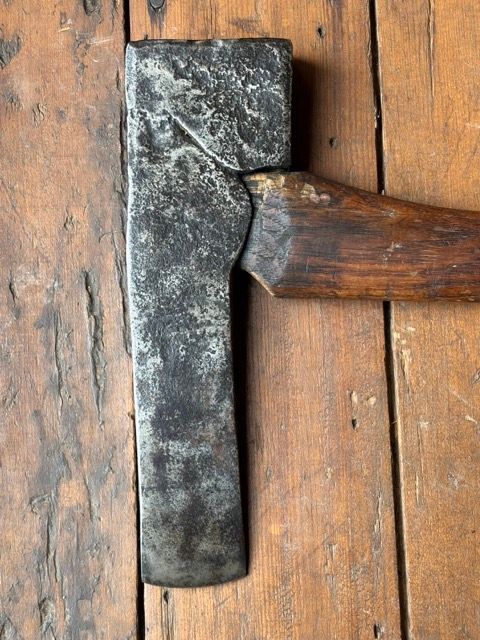
Antique Hand Forged Pennsylvania Mortising Axe
$285.00
In stock: 1 available
Product Details
Description
This antique hand-forged Pennsylvania mortising axe (often referred to as a post-hole or mortise axe) is a specialized woodworking tool crafted for deep timber joinery and fence building. Featuring a narrow, thick head with a tall profile, it was engineered to chop narrow, deep mortise slots into vertical wooden posts and heavy structural timber. Hand-hammered by regional blacksmiths, it displays unique hand-forging marks, a robust poll, and a narrow bit designed to withstand intense levering and chopping forces without binding in tight grain.
Detailed History
Originating in 18th and 19th-century rural Pennsylvania, mortising axes were critical tools for agricultural expansion, barn building, and rail fence construction. Early American blacksmiths forged these axes individually, combining iron bodies with high-carbon steel bits welded into the cutting edge to preserve durability. Pennsylvania patterns were heavily influenced by German and European timber-framing tools brought over by early settlers, adapted specifically for North American hardwoods like oak and chestnut. Because each tool was custom-forged, surviving original examples showcase distinct regional forging styles and individual blacksmith touchmarks, making them highly prized pieces of American tool heritage.
Dimensions & Weight
| Specification | Value |
| Total Weight | ~3.5–5.0 lbs (varies by forge) |
| Head Length (Poll to Bit) | 9.0–11.0 inches |
| Bit Width (Cutting Edge) | 1.5–2.5 inches (Narrow profile) |
| Overall Length (Haft) | 26–32 inches |
| Head Material | Hand-Forged Wrought Iron with High-Carbon Steel Bit |
| Handle Material | American Hickory or Ash (Straight or slightly curved) |
Antique Hand Forged Pennsylvania Mortising Axe