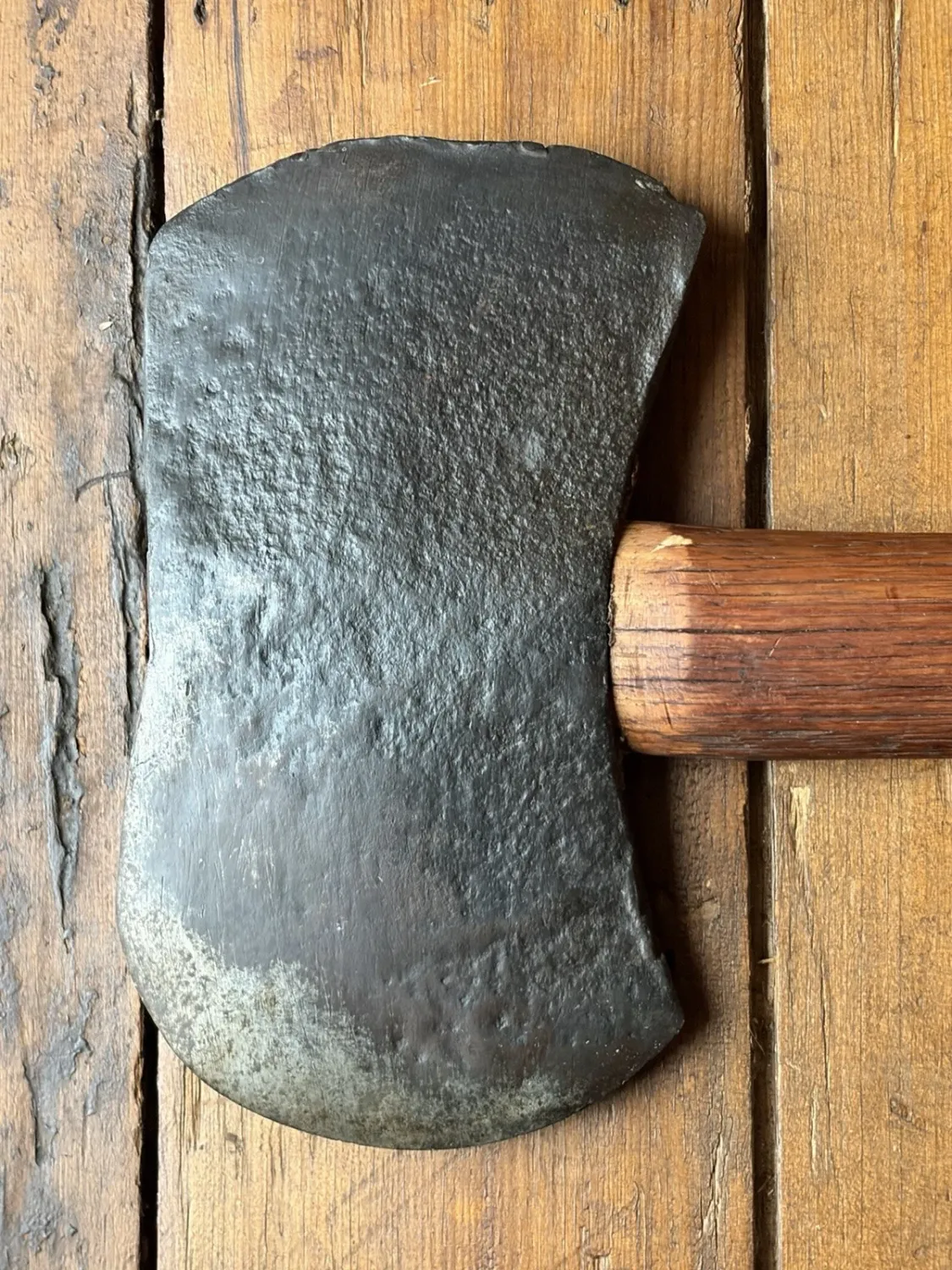
Antique Unmarked Double Bit Felling Axe Head with Re-Profile Character & Chipped Edge
$265.00
In stock: 1 available
Product Details
This old double bit felling axe carries the rugged aesthetic of heavy timber work and real-world history, featuring an unmarked head with a visible chip on one of its cutting bits. Designed with traditional double-edge versatility, one bit was kept thin for deep felling cuts, while the opposite side was typically ground thicker for limbing near knots and hard wood. Though missing its maker’s mark, the clean forge symmetry, crisp eye profile, and age-earned steel patina make it a fantastic candidate for display, an authentic farmstead prop, or a rewarding re-profiling and restoration project.
Detailed History
Unmarked double bit axes were commonplace throughout 19th and early 20th-century North America. While premier tool makers stamped their names for retail hardware sales, many high-quality heads were forged without brand markings for regional trade supply, hardware stores selling under house labels, or contract sales to logging camps. Double bit axes revolutionized American forestry by allowing lumberjacks to carry a single tool with two specialized bit profiles into the woods. Edge chips like the one on this example were common working badges of honor, usually caused by hitting frozen wood knots, buried wire, or hidden stones during heavy felling operations.
Dimensions & Weight
| Specification | Value |
|---|---|
| Total Weight | ~3.5–4.5 lbs (~1.6–2.0 kg) |
| Head Weight | ~3.25–3.5 lbs (Standard Double Bit Pattern) |
| Head Length (Bit to Bit) | ~9.0–10.0 inches |
| Blade Width (Cutting Edges) | ~4.25–4.75 inches |
| Overall Length (Haft) | ~34–36 inches (if hung) |
| Head Material | Forged High-Carbon Steel |
| Condition Notes | Unmarked, visible chip on bit edge, deep age-earned steel patina |
Antique Unmarked Double Bit Felling Axe Head with Re-Profile Character & Chipped Edge